Jun 3, 2026
LisbonID Conference 2026: Two Days on European Digital Identity
What the LisbonID Conference Is
LID is a summit dedicated to electronic identification, trust frameworks and digital identity wallets. The format deliberately mixes three groups that usually meet separately: public authorities responsible for national identity programmes, private sector organizations that rely on those credentials, and the companies building the underlying technology.
That mix is the point. Identity policy written without implementers produces regulation nobody can build. Technology built without regulators produces products nobody can deploy. The programme was structured to keep both in the same room for two days.
The inaugural edition ran at Fundação Oriente in Lisbon, a venue chosen for its scale and for keeping the exhibition, the plenary sessions and the informal conversations within a few metres of each other. Several attendees noted afterwards that the most useful exchanges happened in the corridors, which is generally a sign the programme left enough room for them.
Why Lisbon
Portugal is a credible host for this conversation. The country has run a national digital identity programme for years, with the Chave Móvel Digital providing authenticated access to public services and qualified electronic signature to a broad citizen base. It also has an unusual combination for a European market of its size: government adoption, a domestic technology sector working in identity and trust services, and a research community active in cryptography and security.
Lisbon also sits at a practical intersection. It is a European capital inside the eIDAS regulatory perimeter, with deep institutional ties to Portuguese-speaking Africa and to Latin America. Delegations from Cabo Verde, Angola, Mozambique and Brazil can attend a European identity conference without treating it as a foreign one. Several conversations at LID 2026 turned on exactly that overlap, where a European regulatory framework meets deployment conditions that look nothing like Northern Europe.
Event Overview
The two days covered the implementation of eIDAS 2.0, the rollout of European Digital Identity Wallets, AI-driven document fraud prevention, and decentralized trust models. The speaker lineup ranged from policy to engineering, which kept the discussion grounded.
The Portuguese Secretary of State for Digitalisation set out the national position on wallet implementation. The CEO of NOSi brought the perspective of a public technology operator with responsibility for delivering services at national scale, a view that tends to cut through optimistic timelines. Trust service providers, biometrics specialists, banks and credential manufacturers filled out the rest of the programme.
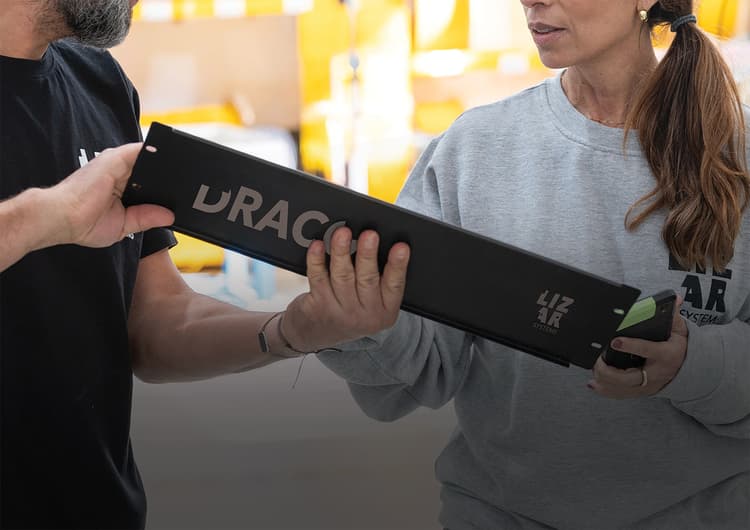
LIZAR demonstrated the complete issuance chain on the exhibition floor, from secure data source to field verification, with every component designed and assembled in Europe.
Key Discussion Pillars
eIDAS 2.0 and the European Digital Identity Wallet
The regulation is settled. The implementation is not. Sessions on this pillar focused on the practical questions member states face: how a wallet is issued and to whom, what happens to citizens without a suitable smartphone, how relying parties are registered and supervised, and how cross-border recognition works when two member states have made different architectural choices within the same legal framework.
A recurring theme was the gap between pilot and production. Large-scale pilots have demonstrated that the technology works. Running a wallet as critical national infrastructure, with support obligations, recovery paths for lost devices and accessibility requirements for an entire population, is a different problem. Several speakers argued that the hardest parts of wallet deployment are operational rather than cryptographic.
AI and document fraud prevention
Two opposing forces framed this pillar. Generative models have made convincing forged documents cheap to produce and easy to distribute, which has changed the economics of identity fraud at the low end. The same class of technology has made automated inspection of physical and digital credentials far more capable.
Discussion moved quickly past detection accuracy toward accountability. A machine learning system that rejects a citizen's document creates an administrative act that must be explained, appealed and audited. Speakers with production deployments made the point repeatedly: the useful property of an AI inspection layer in a public programme is not its accuracy rate but its ability to produce a record a human can examine and defend months later.
Decentralized trust and verifiable credentials
Self-sovereign identity and verifiable credentials were discussed with less enthusiasm and more precision than in previous years, which most participants took as progress. The sessions addressed selective disclosure, revocation at scale, the governance of trust registries, and the question of who is accountable when a credential is presented and the issuer is no longer reachable.
Physical credentials in a digital programme
The pillar that generated the most practical discussion was the relationship between physical and digital identity. Digital wallets do not remove the need for a physical credential. Border control, offline verification, populations without smartphones, emergency situations and legal requirements in many jurisdictions all keep the card and the passport in service.
The productive framing was one credential with multiple trust functions: a secure physical document that also carries the chip, the certificates and the biometric reference behind a digital identity. Getting that relationship right determines whether a national programme works for everyone or only for the connected majority.
Sessions in this track also covered issuance logistics, which rarely make it onto a conference agenda and probably should more often. How long a citizen waits for a document, whether it is produced centrally or at the enrollment point, how a lost card is replaced, and what the failure rate looks like at volume are the measures by which the public actually judges an identity programme. Delegations from countries where postal distribution cannot be relied upon were direct about this: a credential that exists in a database and not in the citizen's hand has not been issued.
The Regulatory Backdrop
Understanding why the room was full helps explain the tone of the discussion. The revised eIDAS framework obliges member states to offer citizens and residents a European Digital Identity Wallet, and obliges large online platforms and regulated sectors to accept it. That converts a long-running technical debate into a delivery deadline with legal consequences attached.
Behind the deadline sits a substantial programme of work. Each member state needs an issuance model, a supervisory structure for relying parties, a certification path for wallet providers, and an answer for every citizen who falls outside the assumptions of the design. Interoperability has to hold across twenty-seven implementations built by different teams under different procurement rules.
Conferences at this stage of a regulatory cycle tend to be either premature or overdue. LID 2026 landed at a useful moment, with the framework fixed and the implementation choices still open enough to be worth debating.
The Exhibition Floor
The exhibition ran alongside the sessions rather than in a separate hall, which kept traffic steady between talks. Exhibitors covered credential manufacturing, biometric capture, wallet platforms, trust services and document verification, giving attendees a reasonably complete view of the supply chain in one space.
For public authorities early in a procurement cycle, that layout has obvious value. A programme lead could see enrollment hardware, personalization equipment, encoding software and verification tooling in sequence, and ask each supplier how their component behaves at the handover points. Integration failures in identity programmes almost always happen at those seams, rarely inside a single product.
What LIZAR Presented
Our contribution covered the full issuance chain: secure data source, machine software, chip encoding, laser personalization, AI inspection, immutable audit logging and verification in the field. Caixa Mágica Software, our technology partner and a co-organizer of the conference, presented the software and AI side of that chain from the stage.
The demonstration equipment produced personalized polycarbonate cards in under 30 seconds per credential, from a 30 kg desktop unit combining laser engraving and chip personalization. Attendees could then verify a card produced minutes earlier over NFC, with local biometric matching and no connection to any central database.
That last detail drew consistent attention from delegations working in regions with unreliable connectivity. Offline verification is often treated as a fallback in European discussions and as a baseline requirement everywhere else.
Takeaways
Three things stood out from two days of sessions.
Operational reality dominated the agenda more than technology selection. The questions that consumed the most time concerned support, recovery, accessibility and audit rather than protocols and cryptographic choices, which suggests the sector has moved past the architecture debate into the delivery one.
European sovereignty shifted from principle to requirement. Where the equipment is made, where the data is processed and who controls the software are now written into evaluation criteria rather than mentioned in closing remarks.
And inclusion kept resurfacing across otherwise unrelated sessions. Any programme that assumes a modern smartphone, reliable connectivity and digital literacy excludes a meaningful share of the population it is meant to serve. The speakers with live national deployments were the most insistent on this point.
Audience
The room was built around qualified buyers rather than general attendance: public sector leads responsible for digital identity and trust frameworks, government and public authorities, innovation leads from financial institutions, and eID and eIDAS technology suppliers.
That concentration changed the quality of the conversation in a way anyone who attends this circuit will recognize. Nobody spent time explaining what a verifiable credential is. Questions from the floor came from people who had already tried something and hit a wall, which produced answers that were correspondingly specific. Several suppliers commented that they had fewer conversations than at a larger trade fair and better ones.
The scale helped. A first edition sized for a few hundred of the right people beats a first edition sized for volume, and the organizers appear to have chosen deliberately.
Looking Ahead
The inaugural edition did what a first edition needs to do. It attracted the right people, held a serious technical conversation, and gave Lisbon a place on the European identity calendar.
LID returns in May 2027 with expanded exhibition space, dedicated policy roundtables for European ministries, and live demonstrations of eIDAS 2.0 reference implementations. By then several member states will have moved from pilot to production, which should turn a good deal of the 2026 speculation into evidence. Calls for keynotes, panel speakers and exhibition sponsorships are open through Caixa Mágica Software and the official conference channels.
Frequently Asked Questions
What is the LisbonID Conference (LID)?
LID is an international summit on electronic identification, trust frameworks and digital identity wallets, held in Lisbon, Portugal. The inaugural edition ran on 27 and 28 May 2026.
What was LIZAR's role in LID 2026?
LIZAR exhibited the full identity issuance ecosystem, from laser personalization and chip encoding to AI inspection and NFC field verification. Our partner Caixa Mágica Software co-organized the conference and took part in the speaker programme.
Who attended the conference?
Government and public authorities, public sector digital identity leads, innovation leads from financial institutions, trust service providers, and eID and eIDAS technology suppliers.
What topics did LID 2026 cover?
eIDAS 2.0 implementation, European Digital Identity Wallet rollout, AI-driven document fraud prevention, decentralized trust models, and the relationship between physical credentials and digital identity.
Where was LID 2026 held?
At Fundação Oriente in Lisbon, Portugal.
When is the next edition?
LID 2027 is scheduled for May 2027 in Lisbon. Calls for speakers and sponsors are open.
Share this resource