Sep 10, 2026
LIZAR at TRUSTECH 2026: Dedicated Booth in Paris
About TRUSTECH
TRUSTECH is the reference international event for payments, identification and secure transaction technology. It brings more than 8,000 visitors from over 90 countries to Paris each year, alongside upwards of 200 exhibitors, and combines a trade exhibition with a conference programme covering digital payments, government identity, biometrics, cybersecurity and digital wallets.
The audience is unusually concentrated. Identity document and card manufacturers, financial institutions, government authorities, payment operators, system integrators and security technology suppliers all attend the same three days. For a company working in secure credential issuance, the buyers, the partners and the competitors are in one building.
Our technology has been present at TRUSTECH since the 2024 edition. This year marks the step from technical visit to a dedicated LIZAR stand with the full ecosystem on the floor.
Why We Are Exhibiting
Secure document personalization has changed shape over the past few years. The traditional model concentrated issuance in a central bureau: large industrial equipment, a single site, batch production and physical distribution of finished credentials to citizens. It works, and it is slow.
Demand has moved toward distributed issuance. Consulates that need to produce a passport on site. Regional registry offices in countries where postal distribution is unreliable. Mobile enrollment teams working outside any fixed infrastructure. Humanitarian operations issuing credentials in the field. Each of these requires the same security guarantees as a central bureau, with none of the same footprint.
That is the argument we are bringing to Paris, supported by equipment visitors can watch work rather than read about. Everything on the stand is engineered and assembled in Europe, with production deployments already running in sovereign identity programmes and in the fintech sector.
Visitors to the LIZAR stand will see real-time laser engraving on polycarbonate identity cards, chip encoding in the same unit, and AI-based visual inspection of each credential as it is produced.
What Visitors Will See on the Stand
Live personalization with DRACO
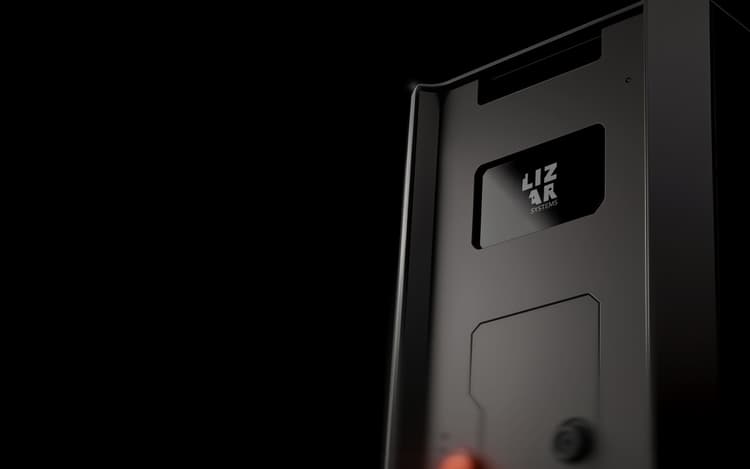
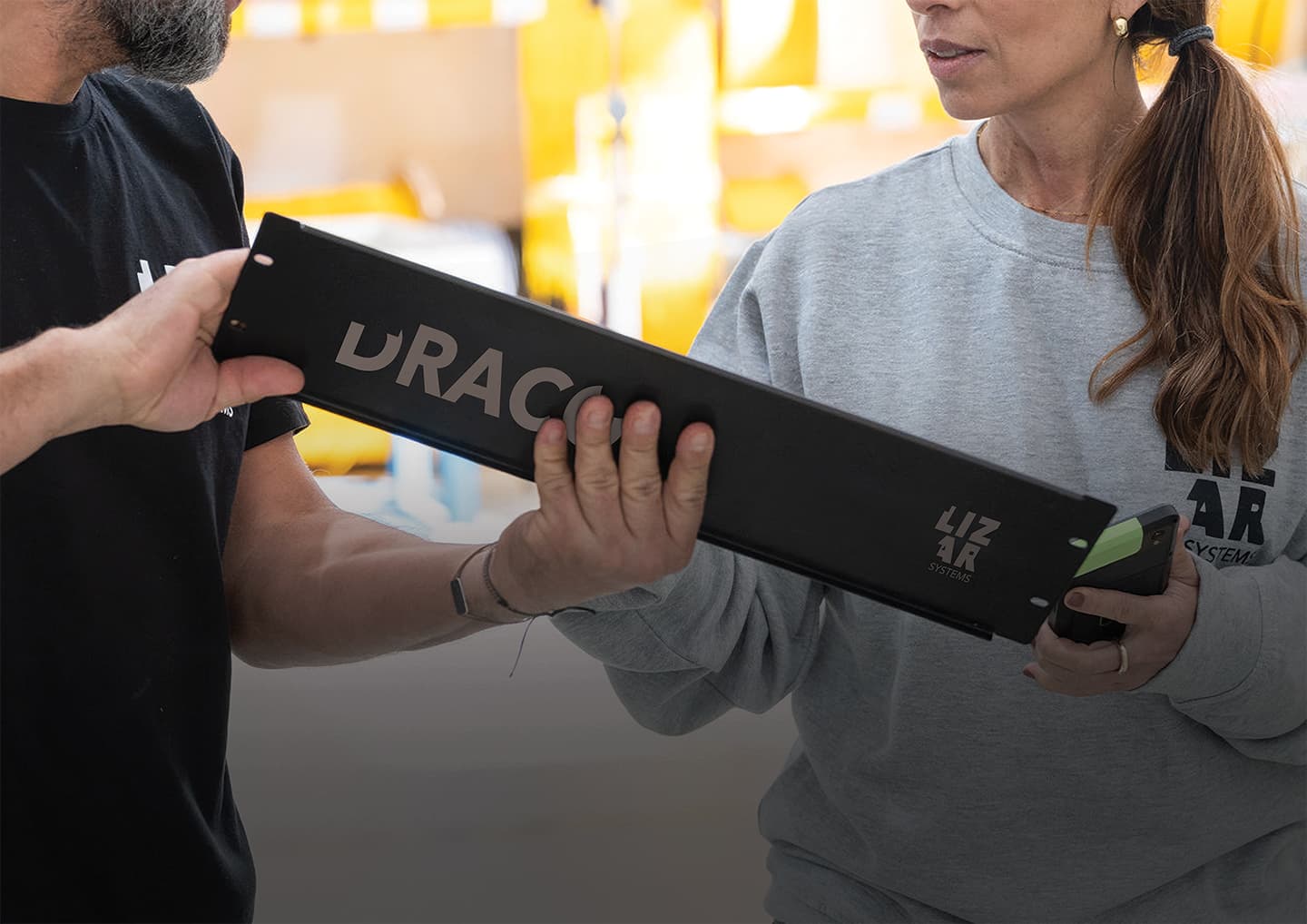
The DRACO system produces a finished secure credential in under 30 seconds, at a throughput of 40 to 100 cards per hour, from a fully enclosed Class 1 laser unit that weighs 30 kg and sits on a desk. It combines 20 W MOPA fibre laser engraving at 1200 dpi with contact and contactless chip personalization in a single machine.
Visitors will watch a card go from blank stock to a personalized document with engraved security elements. Native features include CLI/MLI, UV/IR and tactile authentication. Licensed features such as OVI, OVD/OVM and SURYS elements are available through partners. Cards use a polycarbonate outer surface over a PVC core, which follows ICAO 9303 practice for high-security documents while keeping material cost under control.
AI quality assurance in operation
Every credential produced on the stand is inspected by GUEKO.ai, which performs visual inspection, defect and anomaly detection, and verification of data and layout against the issuance record. The demonstration is deliberately unglamorous: the team will show rejections as well as accepted output, because the useful question for a public authority is not whether an AI system catches defects but whether it can justify each decision afterwards.
Chip encoding and digital trust
KMODO.ai handles electronic personalization and certificate workflows. For delegations running or planning a PKI, the stand demonstration covers how chip encoding integrates with existing certificate authorities rather than replacing them, and how encoding events are recorded in the immutable audit log.
Fleet management across sites
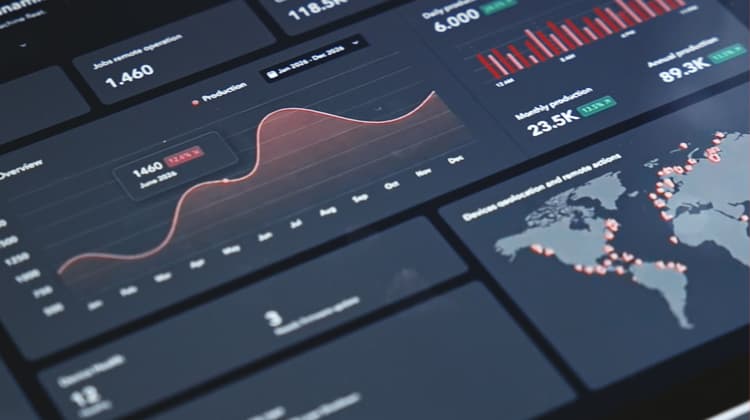
IGUAN MDM is the piece that makes distributed issuance governable. It provides remote monitoring, equipment management, policy enforcement and production visibility across every deployed unit. The demonstration shows what a central authority sees when twelve regional offices are producing credentials simultaneously, and what happens when one of them loses connectivity.
Verification in the field
ZAR ID closes the loop. It reads a personalized card over NFC, performs local biometric matching and validates the data offline, with no central database dependency. Visitors can verify a card produced minutes earlier on the same stand.
Who Should Visit the Stand
- Government delegations, ministries and national mints: secure document issuance, national eID and civil registry programmes, and high-precision laser personalization for centralized, regional or mobile deployment.
- Financial institutions and card manufacturers: instant issuance of payment credentials, corporate access cards, and cryptographic personalization. The recovery key card deployment in the crypto-security sector is a relevant reference here.
- System integrators: authenticated REST APIs, chip encoding workflows and integration paths for biometric enrollment, digital signature and document verification.
- Distributors and channel partners: partner models for markets in Europe, Latin America and Africa, where LIZAR already operates regional offices in Lisbon, Bogotá and Praia.
The European Argument
Sovereignty has moved from a talking point to a procurement criterion. Public authorities buying identity infrastructure now ask where the equipment was designed, where it was assembled, who maintains the software, and what happens to the programme if a supplier relationship changes or an export rule shifts. The answers used to be a formality. They are now part of the evaluation.
The technology shown in Paris is designed, engineered and assembled in Europe, from our headquarters in Lisbon and our production facility in Pombal, Portugal. Biometric verification runs locally on the device rather than against a central database held elsewhere. Audit logs stay under the operator's control. For a ministry, this is not an ideological position. It is the difference between running a national programme and renting one.
The same argument applies to the AI layer. Quality inspection and anomaly detection run as part of the issuance chain, on the authority's own equipment, producing records the authority can inspect. Nothing about a rejected credential needs to leave the site to be explained.
The Operational Case for Distributed Issuance
The cost comparison between central and distributed issuance is usually presented as equipment price against equipment price. That is the least interesting part of it.
A central bureau model carries a distribution chain: secure transport, tracking, storage, failed deliveries, reissues, and a citizen waiting somewhere between two and eight weeks. Each of those steps has a cost, and several carry a security exposure. A finished credential in transit is the most vulnerable it will ever be.
Issuing at the point of enrollment removes most of that chain. The citizen is present, the biometric capture and the personalization happen in the same session, and the document is handed over directly. Nothing is transported, nothing is stored in finished form, and nothing goes missing between a production floor and a post office.
The trade-off is governance. Twenty machines in twenty offices are harder to control than one line in one building, which is precisely why fleet management sits at the centre of the demonstration rather than at the edge of it. Remote monitoring, policy enforcement, consumable tracking and immutable logging are what make a distributed model auditable. Without them, distribution is just a loss of control with better latency.
Visitors evaluating this shift will find the stand set up to answer the operational questions rather than the marketing ones: what happens when a unit fails, who can authorize a reprint, how a card rejected by the inspection layer is accounted for, and what an auditor sees six months later.
A Track Record on the International Circuit
The Paris stand is part of a longer sequence. The technology has been shown at TRUSTECH in Paris in 2024, Japan IT Week Spring in Tokyo in April 2025, Identity Week Europe in Amsterdam in June 2025, ID4Africa in Abidjan in May 2026, and the inaugural LisbonID Conference in Lisbon that same month.
Each market taught something different. Tokyo tested how the technology reads to a corporate IT audience with a strong preference for domestic suppliers. Amsterdam put the equipment in front of the densest concentration of identity specialists in Europe, with more than 5,000 attendees and 250 exhibitors. Abidjan, where the machine ran on a partner stand, confirmed how directly distributed issuance answers the practical constraints of African identity programmes. Lisbon put the ecosystem in front of European ministries and regulators.
Paris in December 2026 is where that sequence turns into a dedicated exhibition presence, with the full ecosystem shown under one name rather than a single machine on someone else's stand.
What to Expect from the 2026 Agenda
The conference programme alongside the exhibition typically tracks where the sector is heading. For 2026 the themes worth watching include the operational rollout of European Digital Identity Wallets under eIDAS 2.0, the relationship between physical credentials and their digital equivalents, generative AI as a document fraud threat, post-quantum readiness for credentials with a ten-year validity period, and instant issuance in retail banking.
These are the same questions our engineers will be discussing at the stand, with the difference that the answers there come with equipment attached.
Practical Information
TRUSTECH 2026 takes place at Paris Expo Porte de Versailles from 1 to 3 December 2026. The venue sits on metro line 12 at Porte de Versailles and is served by tram line T3a, roughly 30 minutes from central Paris and accessible from both Charles de Gaulle and Orly airports.
Registration is handled through the official TRUSTECH website. Early registration is worth the effort in December, when Paris hotel availability tightens.
For delegations traveling with a technical evaluation agenda, two practical notes. Bring your document specification, including substrate, dimensions, security element requirements and any chip profile already in use, since that turns a general demonstration into a specific one. And allow time for a second visit later in the event: the first conversation usually raises questions that are better answered with the engineering team once the initial ground has been covered.
Meetings at the LIZAR stand can be scheduled in advance, which is the practical recommendation for anyone with a specific technical agenda. Three days pass quickly, and a booked slot with an engineer is considerably more useful than a queue at a busy stand. Delegations wanting a demonstration built around their own document specification should say so when booking, so the team can prepare the relevant card stock and layout beforehand.
Frequently Asked Questions
Where and when is TRUSTECH 2026 held?
TRUSTECH 2026 takes place at Paris Expo Porte de Versailles in Paris, France, from 1 to 3 December 2026.
How can I book a meeting at the LIZAR stand?
Delegations and partners can schedule a technical meeting or live demonstration through the demo request form. Mention your document type and deployment context so the team can prepare.
What technology will be demonstrated?
Live laser personalization and chip encoding with DRACO, AI quality inspection with GUEKO.ai, chip and certificate workflows with KMODO.ai, fleet management with IGUAN MDM, and NFC field verification with ZAR ID.
Can I see a card personalized with my own design?
Yes, subject to lead time. Contact the team in advance with your layout and substrate requirements.
Is the equipment suitable for mobile or field deployment?
Yes. DRACO is a 30 kg desktop unit designed for central production sites, regional offices, consulates and mobile teams, managed centrally through IGUAN MDM.
Which standards does the equipment comply with?
Certification to ISO/IEC 27001 and ISO 9001, alignment with ISO 14298 workflows and ICAO 9303 practice, and a fully enclosed Class 1 laser with integrated filtration.
Share this resource