Sep 4, 2026
LisbonID Conference 2027: Second Edition Announced
Building on the First Edition
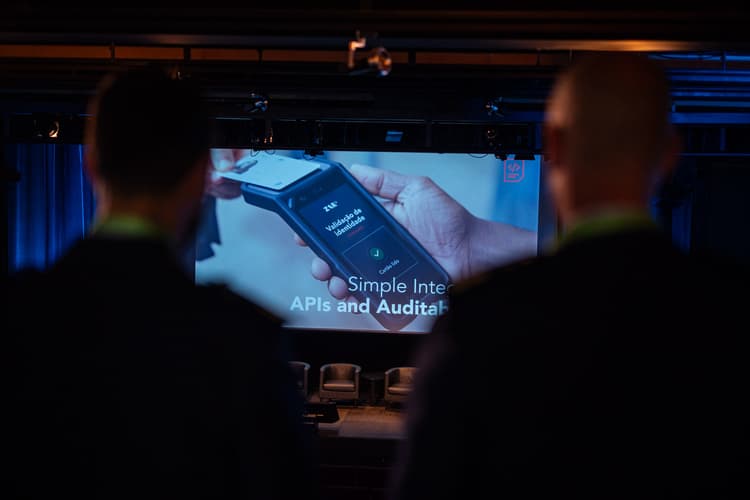
The inaugural LisbonID Conference ran at Fundação Oriente on 27 and 28 May 2026. It brought together government ministers, public sector programme leads, regulators, financial institutions and technology suppliers for two days on electronic identification, digital wallets and sovereign identity frameworks. The Portuguese Secretary of State for Digitalisation and the CEO of NOSi spoke alongside international figures in trust services. LIZAR exhibited the full issuance ecosystem, from laser personalization to NFC field verification.
What made the first edition work was concentration rather than size. The room was built around people responsible for delivering identity programmes, which meant nobody spent time on definitions and the questions from the floor came from teams that had already hit real obstacles. Several exhibitors reported fewer conversations than at a large trade fair and considerably better ones.
The 2027 edition keeps that principle and expands around it.
What Changes in 2027
Three additions shape the second edition.
Expanded exhibition space. The 2026 layout kept exhibitors close to the sessions, which worked. More floor space in 2027 allows a fuller view of the supply chain, from enrollment and capture through personalization, encoding and verification, without losing the proximity that made the first edition useful.
Policy roundtables for European ministries. Closed sessions give member state representatives a setting to compare implementation choices directly. Much of the value in the first edition happened in corridor conversations between authorities facing the same problem from different starting points. The 2027 programme gives that a structure.
Live eIDAS 2.0 reference implementations. By May 2027 several member states will have moved from pilot to production. The programme is designed around working systems rather than roadmap presentations, with demonstrations attendees can interrogate.
LID 2027 features expanded exhibition space, dedicated policy roundtables for European ministries, and live technical demonstrations of eIDAS 2.0 reference implementations.
Core Themes
European Digital Identity Wallet rollout
The framework is fixed and the deadlines are real. The interesting material now sits in delivery: how wallets are issued at national scale, how relying parties are registered and supervised, what recovery looks like when a citizen loses a device, and how cross-border recognition holds up between member states that made different architectural choices inside the same legal text.
Sessions will prioritize evidence from early adopter states and from private sector relying parties who have integrated wallet acceptance into live services. Adoption numbers, support volumes and failure modes are more useful at this point than architecture diagrams.
One question runs underneath the whole track. A wallet that works for a digitally confident citizen with a recent smartphone is a solved problem. A wallet that works for everyone entitled to public services, including people without suitable devices, without reliable connectivity or without the confidence to use either, is the actual obligation. Programmes that treat this as a late-stage accessibility review tend to discover the cost of that ordering the hard way.
Biometrics and post-quantum cryptography
Credentials issued today carry validity periods of five to ten years. Any cryptographic decision made now has to survive that window, which puts post-quantum migration on the agenda for passport and national ID programmes well before it becomes urgent elsewhere.
This track covers algorithm transition planning for e-passports and national ID cards, the practical constraints of chip capability and inspection system compatibility, and how biometric templates are protected across a document's lifetime.
AI-driven identity fraud and detection
Generative models have made convincing forged documents cheap to produce, which changed the economics of fraud at the low end of the market. The same technology class has made automated inspection substantially more capable.
Sessions will cover deepfake resistance in remote onboarding, automated detection of credential tampering, and the accountability question that follows any machine decision in a public programme. A system that rejects a citizen's document creates an administrative act that has to be explained, appealed and audited. Explainability is treated here as a compliance requirement rather than a research topic.
Physical and digital credentials together
Digital wallets do not retire the card or the passport. Border control, offline verification, populations without suitable devices and legal requirements across many jurisdictions all keep physical credentials in service.
This track examines the working model of one credential carrying multiple trust functions, along with the issuance logistics that determine whether a programme reaches its whole population: central versus distributed production, time to issue, replacement of lost documents, and failure rates at volume.
Identity beyond Europe
Lisbon's position makes this track natural. Delegations from Portuguese-speaking Africa, from Latin America and from other regions operating under different constraints bring deployment conditions that European frameworks rarely anticipate. Intermittent connectivity, unreliable postal distribution and limited smartphone penetration are not edge cases in much of the world.
Why 2027 Is the Useful Year
Identity conferences have a habit of arriving at the wrong point in a regulatory cycle. Too early and the programme fills with speculation about rules nobody has finalized. Too late and everyone presents the same completed project.
May 2027 sits at a rare midpoint. The eIDAS 2.0 framework is settled, several member states will have live wallet deployments with real user numbers behind them, and a larger group will be mid-implementation with decisions still reversible. The first cohort will have learned things the second cohort needs, and both will be in the room.
The same applies to the physical side. Post-quantum planning for documents with ten-year validity is moving from theory to procurement language. AI inspection in credential production has passed the pilot stage in several programmes. There is evidence to discuss rather than intentions to announce.
Format and Approach
The organizing committee is keeping the elements that made the first edition work.
Sessions stay short enough to hold attention and long enough to reach substance, with generous time for questions. Panels are assembled around genuine disagreement, since a panel where everyone agrees is a press release delivered by four people. The exhibition sits next to the sessions rather than in a separate hall, so traffic flows naturally between them.
Scale is managed deliberately. The intention is not to grow LID into a general trade fair. A conference sized for a few hundred of the right people produces better conversations than one sized for volume, and the value of attending depends on who else is in the room rather than on how many.
The policy roundtables are the one structural addition, and they exist because of a pattern observed in 2026. Representatives from different member states kept finding each other informally to compare notes on the same implementation problems. Giving that a dedicated format, with a moderator and without suppliers present, should make those exchanges more productive.
Call for Speakers
The organizing committee is accepting proposals across several formats.
- Keynotes: policy direction, national programme experience, or a substantiated position on where the sector is heading.
- Panel participation: structured debate on a theme above, with speakers chosen for genuine disagreement rather than consensus.
- Technical sessions: implementation detail for an audience that can follow it, including architecture, integration and operational results.
- Case studies: a deployed programme described honestly, including what did not work. These were consistently the best attended sessions in 2026.
Proposals from public authorities with live deployments are particularly welcome, as are submissions from teams working outside Europe. Product pitches are not. The first edition's reputation rests on the programme staying substantive, and the committee intends to protect it. Submissions go through Caixa Mágica Software and the official conference channels.
Sponsorship and Exhibition
Sponsorship and exhibition packages are open for organizations working in identity, trust services, credential manufacturing, biometrics, secure hardware and adjacent fields.
The audience profile is the relevant consideration here. LID attracts qualified buyers: public sector leads with budget responsibility for identity programmes, government and public authority representatives, innovation leads from financial institutions, and integrators delivering national systems. For a supplier in this sector, that concentration is worth more than a larger number of general attendees.
Packages cover exhibition space, speaking opportunities where the content fits the programme, and participation in networking sessions. Organizations interested in the policy roundtable format should discuss it early, since access there is deliberately limited.
Who Should Attend
- Government ministries and public authorities running or planning national identity programmes
- Civil registry and population registration authorities
- National mints, security printers and credential manufacturers
- Trust service providers and certificate authorities
- Banks, payment providers and regulated sectors implementing wallet acceptance
- System integrators delivering identity infrastructure
- Researchers and policy specialists working on identity, cryptography and digital trust
Why Lisbon
Portugal combines a mature national digital identity programme, a domestic technology sector working in identity and trust services, and institutional ties that stretch well beyond Europe. Delegations from Cabo Verde, Angola, Mozambique and Brazil can attend a European conference without treating it as foreign territory, and European authorities get access to deployment experience from regions that solve identity problems under harder constraints.
May is also a practical choice. The weather cooperates, travel connections into Lisbon are good from across Europe, Africa and the Americas, and the date sits far enough from the December events in Paris to avoid competing for the same budgets and the same calendars.
Key Dates and Meeting Us in Lisbon
LID 2027 takes place in Lisbon in May 2027. Exact dates and the venue will be confirmed shortly, along with deadlines for speaker proposals and sponsorship commitments. Delegations wanting a technical session with the LIZAR team during the conference can book ahead through our demo request form.
Organizations planning to participate should register their interest now, since the 2026 edition filled faster than expected and speaking slots were allocated well before the event.
Registering interest early has a second benefit for suppliers. Exhibition layout and session scheduling are decided months ahead, and organizations that engage during that window have more influence over where they sit and how their content fits the programme. Late commitments get what is left.
Public authorities considering a delegation should also make contact early. The organizing team can help shape a visit around specific programme requirements, including introductions to authorities at a comparable stage of implementation, which is usually the most valuable part of attending.
Frequently Asked Questions
When will LID 2027 take place?
LID 2027 is scheduled for May 2027 in Lisbon, Portugal. Exact dates and venue details will be released shortly.
How can organizations participate or submit papers?
Calls for keynotes, panel speakers and exhibition sponsorships are open through co-organizer Caixa Mágica Software and the official conference channels.
What topics will LID 2027 cover?
European Digital Identity Wallet rollout, biometrics and post-quantum cryptography, AI-driven identity fraud and detection, the relationship between physical and digital credentials, and identity programmes outside Europe.
Who attends LID?
Government and public authorities, civil registry bodies, national mints and security printers, trust service providers, financial institutions, system integrators, and researchers in identity and cryptography.
What was the first edition like?
LID 2026 ran on 27 and 28 May 2026 at Fundação Oriente in Lisbon, with the Portuguese Secretary of State for Digitalisation, the CEO of NOSi and international trust services leaders among the speakers. LIZAR exhibited the full issuance ecosystem.
Will LIZAR be at LID 2027?
Yes. LIZAR Systems will exhibit, with live demonstrations of laser personalization, chip encoding, AI quality inspection and NFC field verification.
Share this resource